
Base-first approach
We treat the base as the structure. When the stone is placed and compacted correctly, the asphalt performs better and stays smoother longer.
Serving Pittsburgh, Pennsylvania & surrounding areas
Mon–Fri 8am–6pm · Sat 9am–2pm
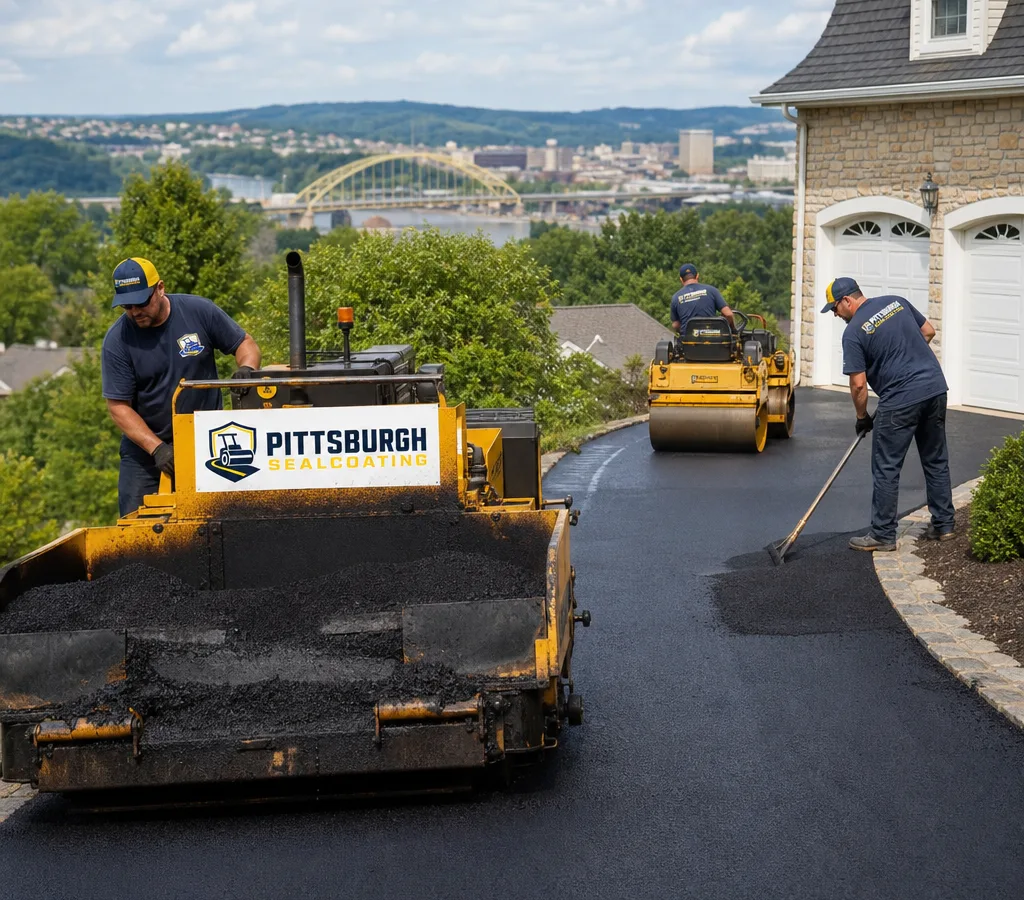
Residential asphalt paving · Pittsburgh, PA
Get a driveway that drains correctly, compacts tight, and looks clean from the curb. Pittsburgh Sealcoating handles residential paving with clear scopes, solid prep, and tidy job sites across Pittsburgh.
Pittsburgh driveway construction
If you are searching for asphalt paving Pittsburgh homeowners can rely on, the difference is almost always in the base and drainage, not the fresh black surface on day one. A driveway can look great when it is laid, then start to settle, crack, or hold water if the stone base was thin, the slope was wrong, or the edges were left weak.
Pittsburgh has steep streets, freeze-thaw cycles, and plenty of shaded driveways that stay wet longer. Those conditions make compaction, water management, and edge support non-negotiable. Our crew focuses on the parts you cannot see later: stable subgrade, properly sized aggregate base, tight rolling patterns, and clean transitions at the apron and garage.
Pittsburgh Sealcoating is based at 2135 Fifth Ave, Suite 4, Pittsburgh, PA 15219, and we schedule paving with local access and traffic in mind, whether your driveway is off a narrow lane with limited staging space or a wider suburban approach with long runs to the street.
Base and site preparation
Good paving starts with a plan for what stays, what goes, and how water moves.
Typical prep for a Pittsburgh asphalt driveway includes:
In neighborhoods with tight lots like South Side Slopes, access and staging matter. In flatter areas such as Brookline, the priority is often widening and cleaning up transitions at sidewalks and the street so the apron drains the way it should.
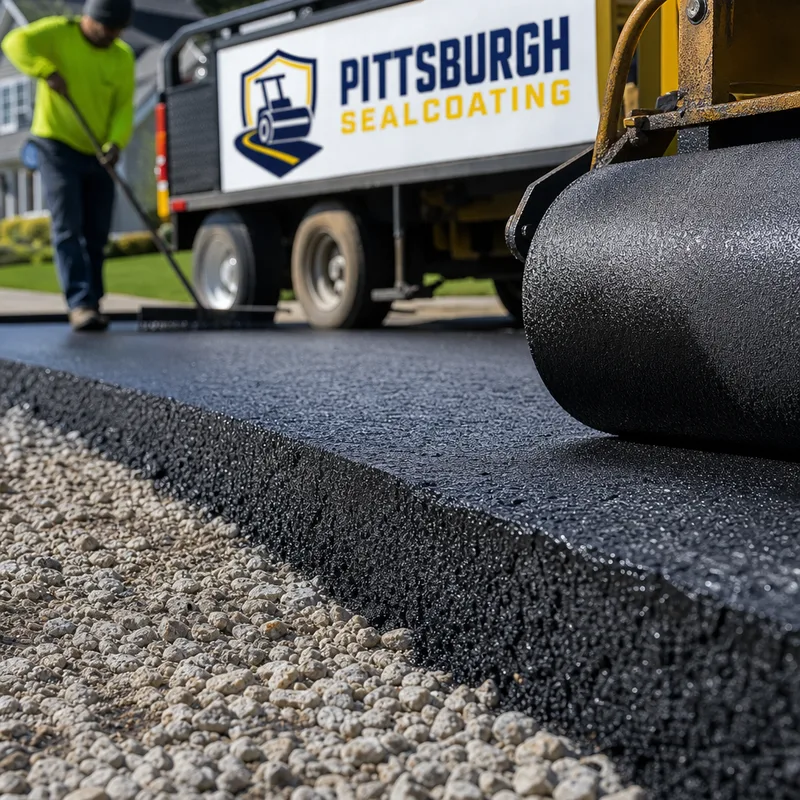
Driveway paving details
We treat the base as the structure. When the stone is placed and compacted correctly, the asphalt performs better and stays smoother longer.
We grade for positive drainage and watch the transitions at garage floors, sidewalks, and street tie-ins so water has a path.
Rolling is timed and sequenced to hit density while the mix is workable, especially on cool or windy days.
We pay attention to joints where new asphalt meets existing pavement and at the apron so the connection is tight and less likely to ravel.
We protect landscaping where we can, keep the site orderly, and leave you clear instructions for curing and first use.
Residential paving options
Residential asphalt paving Pittsburgh projects come in a few common shapes. The right one depends on the condition of what is already there, the driveway's slope, and how the base is behaving.
New driveway installation: For new construction or a full rebuild, we establish subgrade, install and compact base stone, then pave to the planned thickness and grade.
Remove and replace: When existing asphalt is badly cracked, sunk, or patched beyond reason, removal and replacement prevents you from paving over problems that will telegraph through.
Asphalt overlay (when appropriate): An overlay can work when the base is stable and the existing pavement is in decent shape. It is not the right answer if you have widespread base failure, pumping, or major settlement.
Aprons and transitions: The driveway apron takes braking, turning, and snowplow contact. This area often needs extra attention to thickness, compaction, and a clean tie-in at the street.
If your goal is long-term surface protection after paving, asphalt sealing is a different service with a different timing window. Many homeowners schedule it later, once the new asphalt has cured; our sealcoating service helps protect the surface from oxidation and water intrusion when the time is right.
Property-based paving estimate
Most residential asphalt paving in Pittsburgh typically runs about $7 to $15 per square foot, with small driveways often totaling $3,500 to $8,000 and larger or more complex driveways commonly landing around $8,000 to $18,000+.
Your final price depends on square footage, required excavation, base thickness, access for trucks and equipment, slope and drainage needs, edge work, and whether you are overlaying or rebuilding. The exact cost is confirmed after a site visit so the scope matches the existing base and grading conditions.
Assessment to finish
We look at base stability, cracking patterns, drainage, and access, then outline the recommended approach so you know what is included.
We coordinate the day around equipment access and street conditions, then protect the areas around the driveway that could be affected by work.
We excavate or regrade as needed, place crushed aggregate in lifts, and compact it to support the finished asphalt.
We place hot-mix asphalt, rake and lute for clean edges, then compact with the right rollers so the mat is tight and uniform.
We check transitions, clean up, and walk you through when to park, how to avoid scuffing at turns, and what to do during the first days.
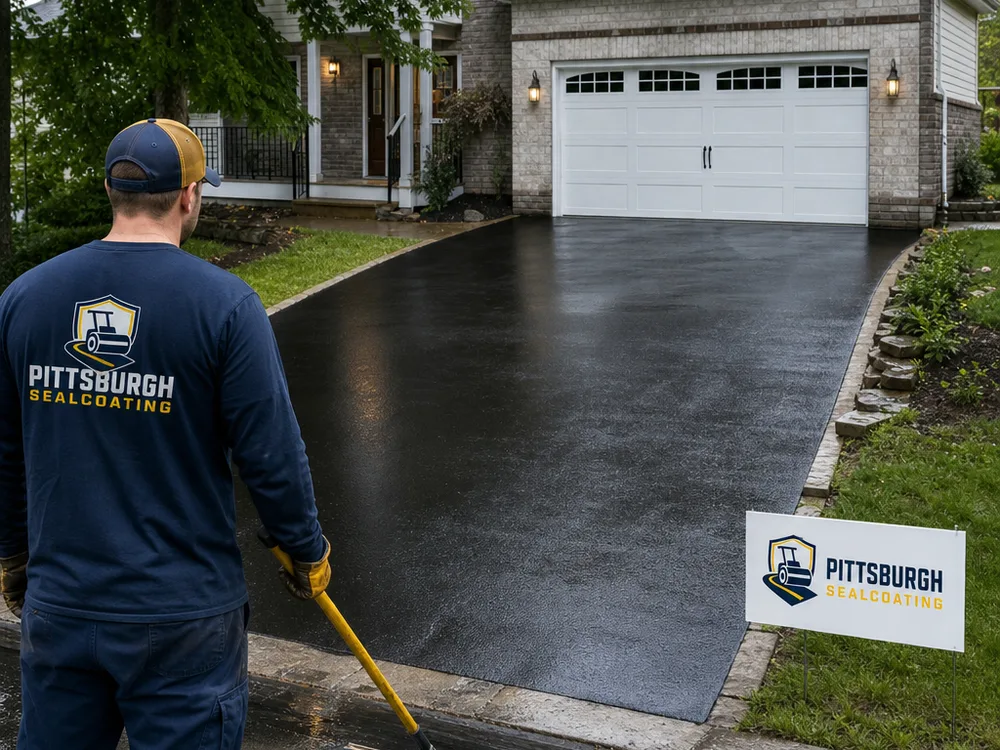
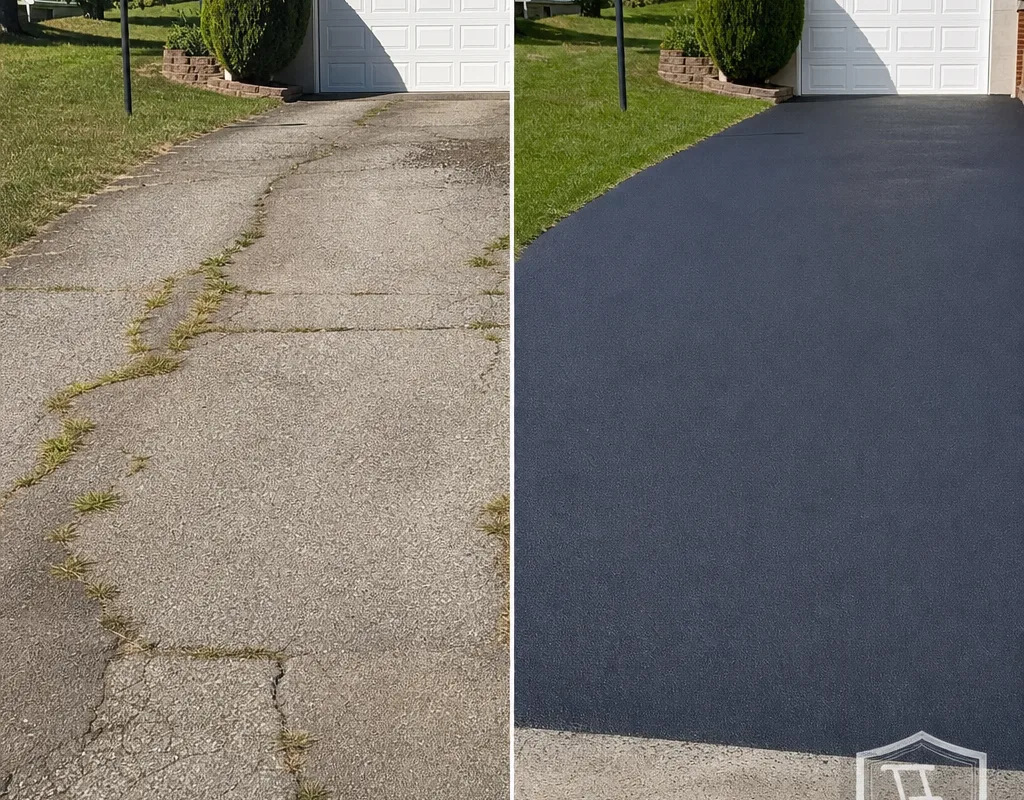
Finished driveway surfaces
Practical paving answers
Most residential paving Pittsburgh jobs can be completed in 1 day once the site is prepped, but excavation, base rebuilds, or drainage corrections can add time. Weather also matters because asphalt placement and compaction require workable temperatures and a dry surface.
In many cases you can drive on new asphalt within 24 to 48 hours, but tight turning, kickstands, and heavy loads should be avoided longer while the surface firms up. We give property-specific guidance based on temperature, shade, and driveway slope.
An overlay can be a good option when the existing pavement is intact and the base is stable, because it refreshes the surface without full removal. If the driveway has widespread settlement, soft spots, or drainage issues, overlaying usually leads to cracks returning quickly, so a rebuild is the better investment.
Residential driveways are commonly paved around 2 to 3 inches compacted for the surface course, with base thickness set by soil condition, load, and drainage. The right build-up is determined on-site, especially on Pittsburgh slopes or where vehicles turn and brake near the garage.
Sometimes, especially if work changes the driveway apron, affects the sidewalk area, or alters how runoff reaches the street. Requirements vary by municipality around Pittsburgh, so we talk through the scope and what approvals may apply before work starts.
New asphalt is typically sealed after it has had time to cure, often several months to a year depending on conditions. If you want to plan ahead, we can set expectations during your paving estimate so sealing happens at the right time for the surface.
Free property inspection
Tell us what you want to fix and what you use the driveway for. We will review drainage, base condition, and access, then provide a clear written scope for your asphalt paving in Pittsburgh.