
Helps block water intrusion
Water is one of the biggest drivers of cracking because it gets into small openings and expands when it freezes. A maintained sealed surface sheds water better than dry, oxidized asphalt.
Serving Pittsburgh, Pennsylvania & surrounding areas
Mon–Fri 8am–6pm · Sat 9am–2pm
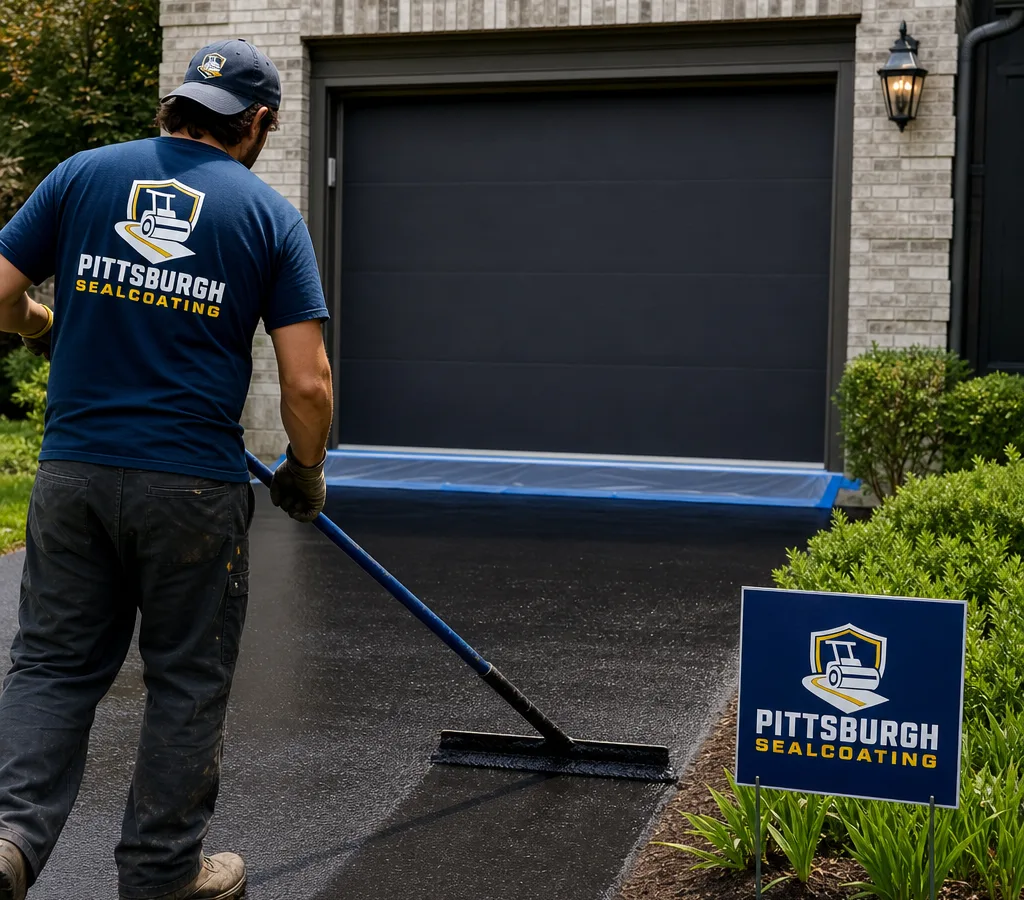
Driveway sealcoating · Pittsburgh, PA
Protect your asphalt from water, salt, and UV with a clean, even coat that looks sharp and holds up through Pittsburgh seasons.
Residential asphalt protection
If you searched for driveway sealcoating near me, you are probably looking for two things: a driveway that looks better now and asphalt that lasts longer. Driveway sealcoating Pittsburgh properties is a practical way to slow down oxidation, reduce water penetration, and help your surface resist winter salt and de-icing chemicals.
Pittsburgh weather runs your driveway through freeze-thaw cycles, spring rain, and hot summer sun. That combination speeds up surface wear, especially on sloped approaches and areas that hold water. A professional application starts with prep, then a consistent coat—or coats where appropriate—so the finish cures evenly and does what it is supposed to do.
Pittsburgh Sealcoating works out of 2135 Fifth Ave, Suite 4, Pittsburgh, PA 15219. For many homeowners, sealcoating is part of a simple maintenance rhythm: keep water out, keep small issues from turning into bigger ones, and keep the driveway presentable year-round.
Preparation and application
Good results come from prep and application, not a quick spray-and-go.
Typical asphalt driveway sealcoating Pittsburgh projects include:
If your driveway has alligator cracking, loose edges, or potholes, sealcoating can still be part of the plan, but repairs come first. Sealer protects sound asphalt; it does not rebuild failed base or damaged pavement.
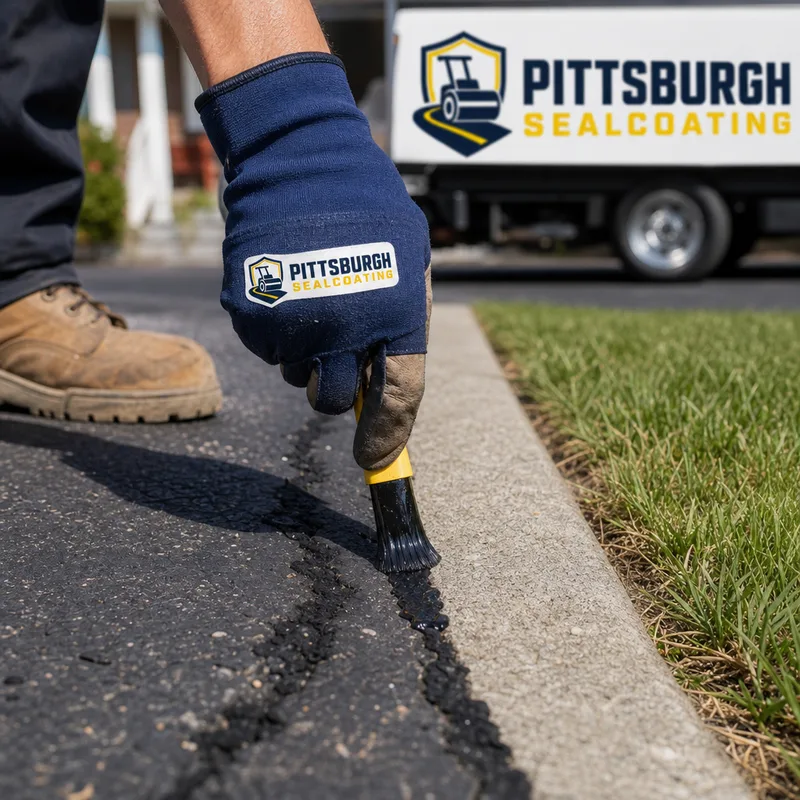
Pittsburgh pavement benefits
Water is one of the biggest drivers of cracking because it gets into small openings and expands when it freezes. A maintained sealed surface sheds water better than dry, oxidized asphalt.
Winter treatment products are hard on pavement. Sealing adds a protective layer that can reduce surface wear and help keep the driveway easier to clean in spring.
UV and air dry out asphalt over time. Sealcoating darkens the surface and slows the chalky, gray look that develops as the binder oxidizes.
A consistent finish can make patched areas and light surface imperfections less noticeable, especially when paired with proper crack filling and neat edging.
Sealcoating works best as part of ongoing care. Keeping up with cleaning, minor crack repair, and periodic sealing often delays larger repair work.
Weather and access planning
Most homeowners want to know two things right away: when can the work be done, and when can they use the driveway again.
Sealcoating depends on dry weather and surface conditions. In Pittsburgh, the most reliable window is typically late spring through early fall, when nights are warmer and rain is less disruptive. If temperatures drop too low overnight or humidity stays high, cure time can stretch and the finish can track.
Plan on staying off the driveway until it cures. Light foot traffic may be possible sooner, but vehicles should wait longer because turning tires can scuff fresh sealer. Your exact timing depends on sun, shade, airflow, and the product used. A shaded driveway in Squirrel Hill or under tree cover in Highland Park may cure slower than a sunny, open approach in Brookline.
If you have questions about scheduling around an HOA, street parking limits, or a shared alley apron, bring it up when you request an estimate so the scope reflects real site logistics.
Assessment to finish
We look at the driveway condition, drainage, cracking, oil staining, and any areas that may need repair before sealing. You get a clear scope so you know what is included.
We clean the surface and address problem spots like oil stains so the sealer bonds. Where crack filling is part of the scope, it happens before the coat goes down.
We apply sealer evenly and protect borders, garage thresholds, and adjacent concrete. Clean edges matter as much as the coat itself for a finished look.
You get straightforward instructions for when to walk and drive on it, plus simple habits that help the surface last, like avoiding sharp turns until fully cured.
Property-based pricing
Driveway sealcoating in Pittsburgh typically ranges from about $250 to $650 for many residential driveways, with larger or steep multi-car driveways often running $650 to $1,200+. Price depends on square footage, crack filling needs, oil spot prep, access—tight alleys and parked streets can add time—and whether a second coat is recommended for coverage.
The most accurate number comes after a quick look at your driveway's condition and layout, so the quote matches the prep and materials your asphalt actually needs.
Customer experience
“They explained what would and would not be helped by sealing, filled the cracks we agreed on, and the edges along the sidewalk came out clean. The driveway looks even and cured when they said it would.”
“We have a sloped driveway and were worried about tracking into the garage. The prep was thorough and they gave clear instructions on when to park again. No mess and a big improvement in appearance.”
Practical answers
Most residential driveways do well with sealcoating every 2 to 3 years, but Pittsburgh freeze-thaw cycles, sun exposure, and traffic can shorten or extend that window. If the surface is turning gray, looks dry and porous, or hairline cracks are starting to show, it is usually time to evaluate sealing again.
Small, stable cracks are typically filled before sealing so water has fewer paths into the asphalt. Sealcoat alone is a thin protective layer and will not bridge wider cracks for long; if the driveway has significant cracking or failed areas, repair should be addressed before asphalt driveway sealcoating in Pittsburgh.
Plan to keep vehicles off until the sealer has cured, which is often 24 to 48 hours under good drying conditions, and longer in cool, humid, or shaded spots. Turning tires are the main cause of scuffs early on, so waiting the full recommended time matters.
Yes, fading is a common sign of oxidation, and sealing can help slow further drying while restoring a darker, cleaner look. The key is that the asphalt still needs to be structurally sound; if you have alligator cracking, potholes, or a soft base, sealing is not a substitute for repairs.
Move vehicles, plan for off-street parking during cure time, and clear the driveway surface of items like basketball hoops, planters, and bins. If you have sprinkler systems near the driveway edge or a garage lip that floods during storms, mention it so the scope accounts for edge control and drainage realities.
Yes. We handle residential driveway sealing across Pittsburgh neighborhoods and nearby communities, and we schedule based on weather windows and route efficiency. If access is tight, like a narrow alley approach or limited curb space, we can review logistics during estimating.
If you want a driveway that looks clean and stays protected through the next round of Pittsburgh weather, get a written scope that spells out prep, crack filling, and cure time expectations.
Book Your Free InspectionFree property inspection
Tell us what you are seeing—cracks, fading, oil stains, or pooling water—and we will recommend the right prep and a sealcoating plan that fits your driveway and schedule. You can also learn more about our broader sealcoating services in Pittsburgh for asphalt maintenance.