
A surface that sheds water
Sealcoating helps reduce water intrusion, which is a big driver of cracking when temperatures bounce above and below freezing.
Serving Pittsburgh, Pennsylvania & surrounding areas
Mon–Fri 8am–6pm · Sat 9am–2pm
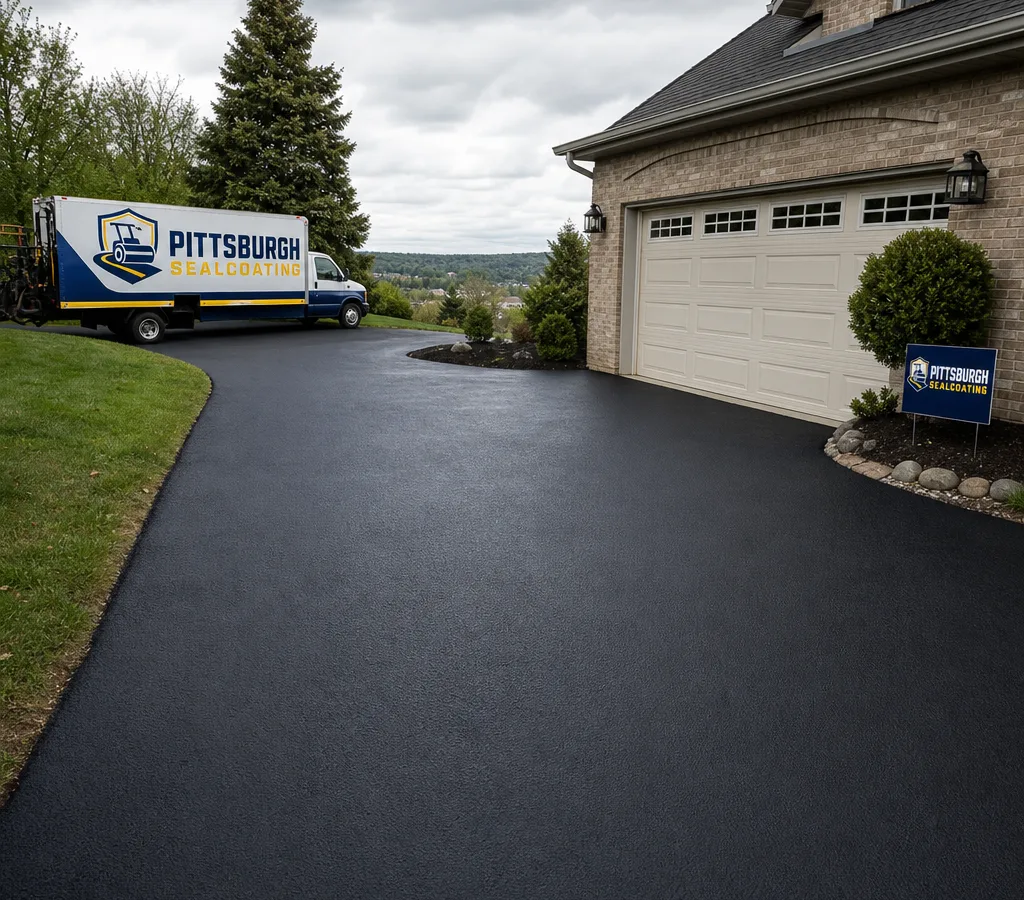
Driveway sealing · Pittsburgh, PA
Protect your asphalt from water, salt, and UV with a clean, even finish. Get a clear plan for prep, drying time, and curb appeal before any work starts.
Pittsburgh pavement protection
Pittsburgh driveway sealing is about keeping water out of the asphalt and slowing down the wear you see after winters, freeze-thaw swings, and road-salt tracking in from the street. A good sealer also cuts down on oxidation from summer sun, which is what turns asphalt gray and brittle over time.
At Pittsburgh Sealcoating, we focus on the fundamentals that make sealing last: correct cleaning, crack prep where needed, and a uniform application rate. If your driveway is sloped (common around Mount Washington and other hillside streets), has a tight approach to the garage, or gets heavy turning at the curb line, we plan for those stress points so the finish stays consistent.
If you are comparing driveway sealers in Pittsburgh, PA, the main difference is not the label on the bucket. It is the prep work, the weather window, and whether edges, joints, and cracks are handled correctly before the sealer goes down. For clients who want a broader overview of services and scheduling, you can also get to know our team at Pittsburgh Sealcoating.
Driveway sealing details
Sealcoating helps reduce water intrusion, which is a big driver of cracking when temperatures bounce above and below freezing.
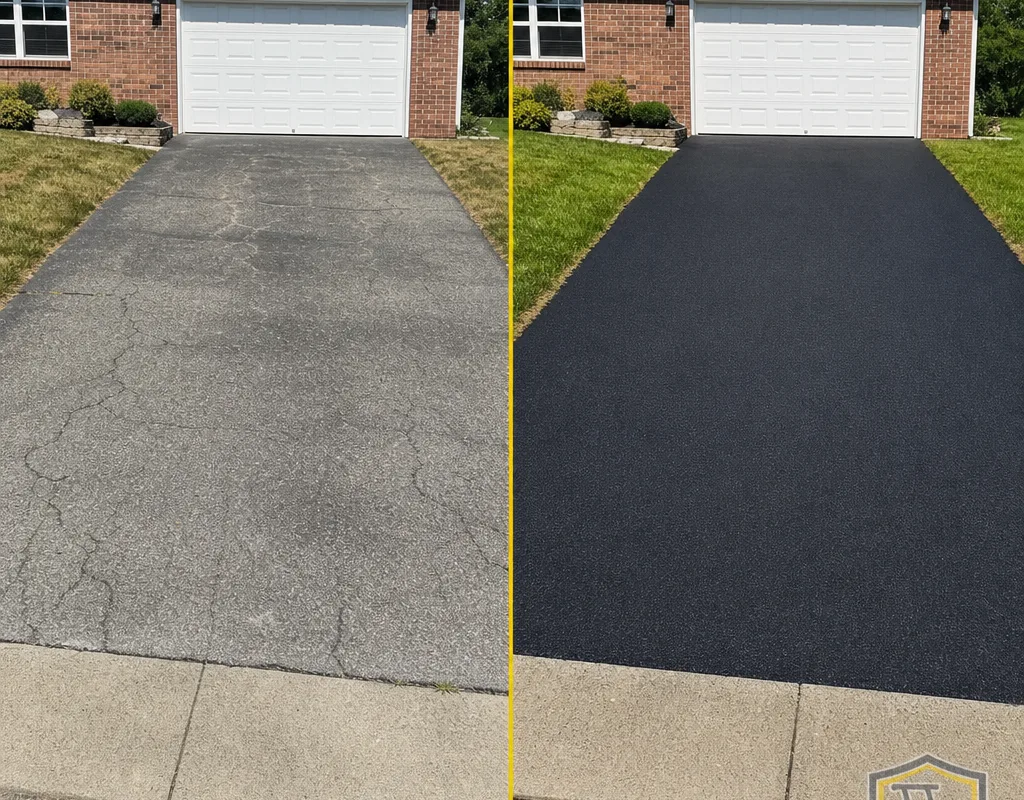
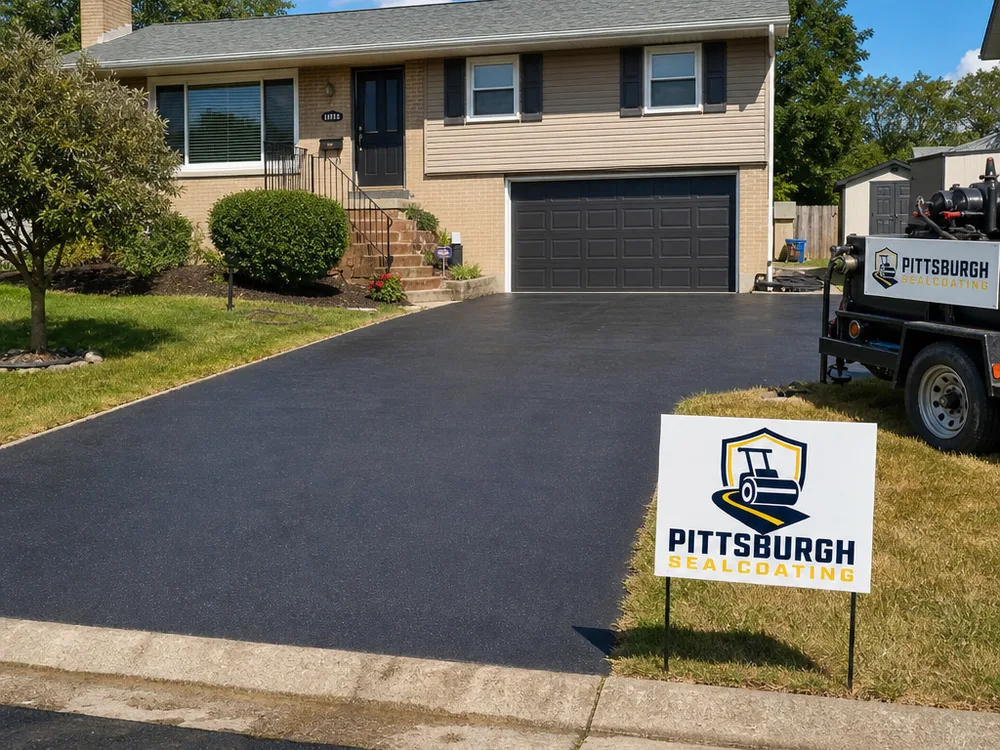
A uniform, dark finish makes patchwork and fading less noticeable and gives the driveway a freshly maintained look.
Salt residue and tracked-in grit grind on asphalt. A sealed surface is easier to rinse and keep clean.
We do not treat every driveway the same. Oil spots, loose material, and open cracks change the prep plan and the results.
We give practical timing expectations for foot traffic and vehicles, based on the day's weather and the driveway's layout.
Preparation and application
A driveway can look fine right after sealing and still fail early if the base is dirty or the surface is oxidized. Our process starts with cleaning and inspection, then moves into targeted prep.
Typical prep includes:
Once the surface is ready and the weather window supports cure time, we apply sealer in a controlled, even coat so you do not end up with thin lines, puddling, or missed edges. The goal is a consistent finish that protects the asphalt, not a rushed coat that looks good for a weekend.
Because Pittsburgh streets and driveways vary so much (tight city lots in Bloomfield versus longer suburban drives in Bethel Park), we plan application and access so you know exactly when you can park again.
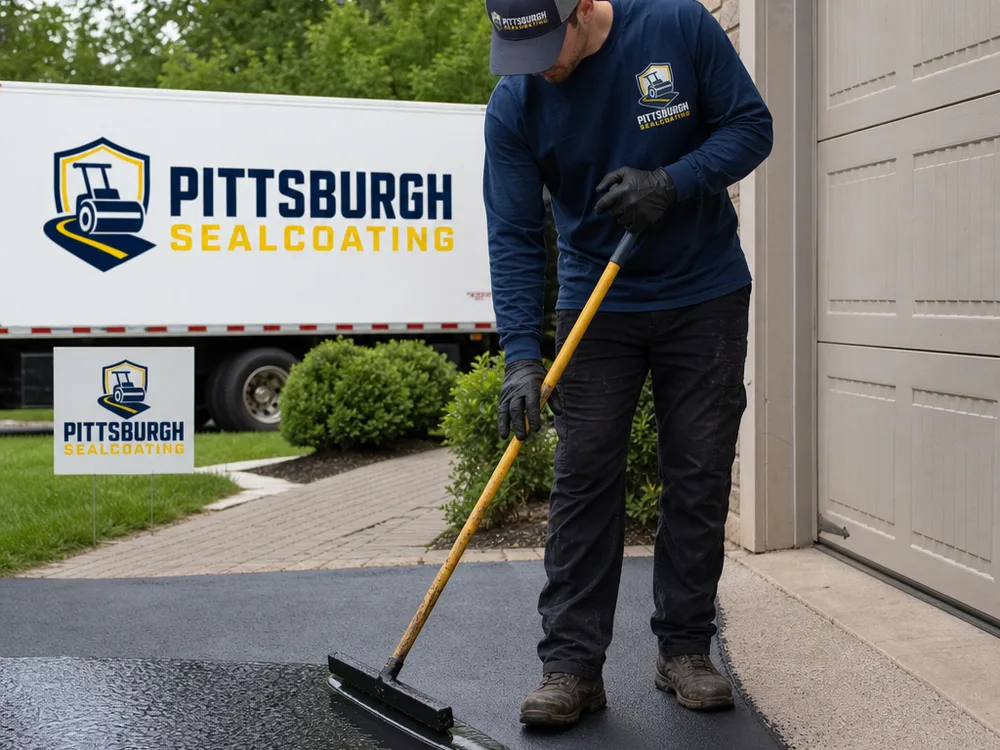
Assessment to finish
We look at asphalt condition, drainage patterns, cracking, and any staining, then outline what prep is needed and what is not.
We remove debris and address adhesion problems (especially oil spots and loose material) so the sealer can bond.
Cracks that will telegraph through the finish or let water in are handled before sealing, so the coating is not asked to do the crack repair job.
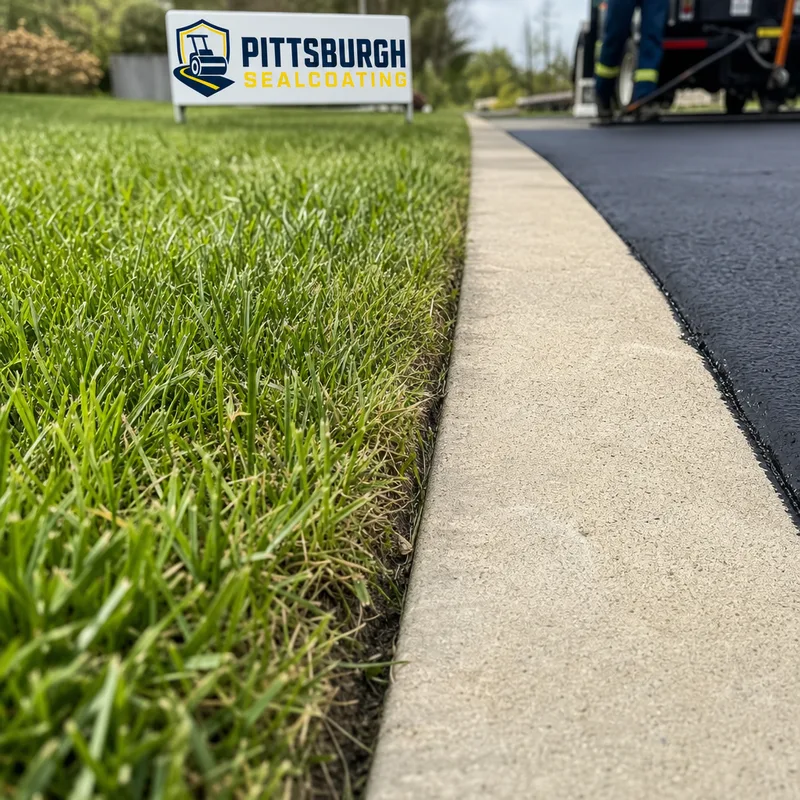
Sealer is applied evenly with attention to edges, transitions at sidewalks, and turning zones where tires scrub the surface.
You get straightforward guidance for keeping vehicles off the surface until it cures enough for traffic, which helps prevent tracking and tire marks.
Property-based pricing
Driveway sealing in Pittsburgh typically runs about $250 to $700 for many homes, while larger or more complex driveways commonly land in the $700 to $1,500+ range. Pricing depends on driveway size, layout (tight city access or steep slope), surface condition, and how much prep is required.
Crack work, oil-spot treatment, heavy cleaning, and detailed edging add time and can change the quote. The most accurate number comes after a quick on-site look at the asphalt and drainage so the scope matches the condition you actually have.
Finished driveway surfaces
Practical answers
Most homeowners schedule sealing during periods of mild, dry weather when the surface can cure without rain and cold nights slowing dry time. In Pittsburgh, that usually means planning around spring, summer, or early fall weather windows, then confirming the forecast close to the work date so the coating has time to set.
Plan to keep vehicles off until the sealer has cured enough for tire traffic, which is often about 24 to 48 hours depending on temperature, humidity, shade, and how much sun the driveway gets. Foot traffic may be possible sooner, but turning tires too early can scuff the finish and leave marks.
Sealer is a protective coating, not a crack repair, so open cracks that move water should be addressed before sealing. If cracks are ignored, they can show through quickly and keep expanding underneath the new coat, especially after Pittsburgh freeze-thaw cycles.
Sealer can darken the surface and reduce how noticeable some staining looks, but oil contamination also affects adhesion. The right approach is to treat or prep oily areas so the sealer bonds as well as possible, then set expectations that severe stains may still be faintly visible.
Many asphalt driveways are sealed on a repeating schedule based on wear, sun exposure, and traffic, commonly every 2 to 4 years. If your driveway is fading fast, has light raveling, or absorbs water instead of shedding it, it is usually time to evaluate it rather than waiting for cracks to spread.
Move vehicles, trailers, and basketball hoops off the driveway and keep the surface clear of loose items. If you can, sweep away leaves and dirt along edges and near the garage door, since those areas often hold debris that interferes with a clean seal.
Free property inspection
Tell us what you are seeing (fading, cracking, oil spots, or drainage issues) and we will recommend the right prep and a sealing plan that fits your driveway and the Pittsburgh weather window.